
Augustine on Friendship
Friendship occupies a central place in Augustinian spirituality. While many people are familiar with the Christian emphasis on communal charity and love of neighbor, the spiritual heritage of St. Augustine of Hippo frames friendship as one of the primary ways human beings pursue truth and holiness together. Augustine’s own relationships profoundly shaped his theology, and in the many centuries since, the Order of Saint Augustine has continued to emphasize friendship as a foundation of religious and communal life.
Augustine’s reflections on friendship appear most famously in his autobiographical work, Confessions. As a young student before his conversion to Catholicism, Augustine developed intense but ultimately unstable friendships, including one with a Manichaean intellectual in Thagaste and another with an unruly, hedonistic group of men in Carthage. The former friend’s early death caused him overwhelming grief, an experience he recounts as spiritually formative. The loss forced him to reconsider the nature of love and attachment, and he would ultimately be confronted with the truth that friendships must be grounded in God rather than treated as ultimate goods themselves.
This insight became foundational for Augustine’s theology of friendship. Far from diminishing friendship’s importance in the Christian life, he argued that ordering friendships towards the divine made them even more valuable. He wrote that true friendship arises when people are united by a shared love of God, describing it as something “welded between souls” by divine charity. In other words, friendship is not merely an emotional bond (of the kind that led him astray in his youth) but a spiritual relationship oriented toward truth and virtue.
Once he became Catholic, Augustine began to form such friendships, notably with Alypius. Alypius and Augustine would walk the path of faith together. They both ultimately became bishops, and their friendship provided each with encouragement and strength as they helped guide the Church through the tumultuous decline of the Roman Empire.
Augustine’s writings — and his life itself — form one of the earliest Christian “theologies of friendship.” His insights would also find their way into his famous Rule, which has inspired and continues to sustain many religious orders throughout the world, including the Augustinians.
In the Rule of St. Augustine, the primary purpose of a religious community is to “live together in unity… with one mind and one heart intent upon God.” Unlike some early monastic traditions, which tended to emphasize solitude, Augustine envisioned communities of people who actively shared life together. The Rule stresses mutual care, shared possessions, and common prayer. The goal is not individual perfection in isolation but collective growth toward holiness.
For Augustine, friendship and community were inseparable, and as people engaged with life together, friendship became not only a source of joy and consolation but also a school of virtue.
The Augustinian Order, formally organized in the thirteenth century but rooted in Augustine’s monastic ideals, continues to emphasize fraternity and shared life today. The Order’s traditional motto expresses Augustine’s vision: anima una et cor unum in Deum—“one mind and one heart intent upon God.”
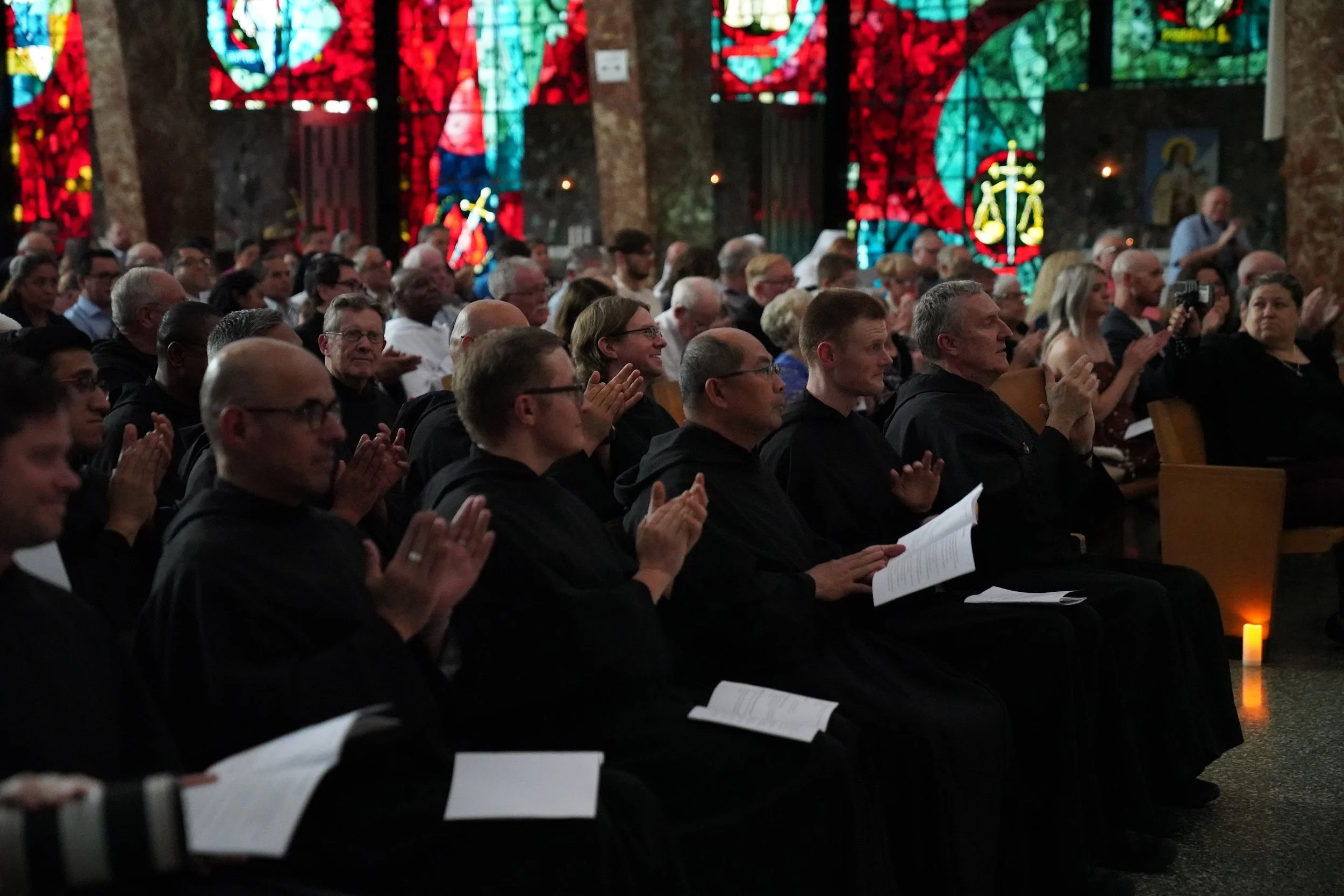
In practical terms, Augustinian friars structure their lives around community friendship through shared daily life, intellectual companionship, and mutual spiritual support — in other words, through the Order’s modern motto of “unity, truth, and love.”
Friars typically live in communal houses where they pray, eat, and spend time together. This ordinary rhythm offers much time to foster meaningful friendships and deep conversations in the shared pursuit of truth. These discussions, along with bonds of trust built on shared faith, not only support the Augustinian mission of education but also allow Augustinian brothers to support each other on the journey to become more like Christ.
This emphasis on fraternity shapes the Order’s pastoral style, as well. Because Augustinian spirituality centers on communal life, friars typically maintain strong relationships with the communities they serve. Many work in parishes, schools, and universities, where they cultivate ongoing friendships with teachers, parishioners, and other collaborators.
This approach reflects Augustine’s belief that friendship should always expand beyond itself. Authentic friendship is not insular; rather, it fosters generosity toward others. As a result, Augustinian communities often serve as hubs of intellectual engagement and charitable service within the broader Church.
For centuries, many faithful Catholics have discovered the Augustinian mode of friendship as a delightful part of their vocation in the Order. But laypeople can also learn from Augustine’s example. By building relationships founded upon a shared pursuit of truth, love of Christ, and growth in virtue, any person can cultivate and participate in Augustine’s vision of friendship as a shared life of faith.
The Midwest Augustinians also invite laypeople to participate in Augustinian friendship through the Friends of Augustine program. The initiative brings together those interested in Augustinian spirituality for prayer, discussion, and fellowship, encouraging participants to grow in faith while forming friendships rooted in Augustine’s vision of unity and shared pursuit of God. Those interested can learn more at midwestaugustinians.org/friends-of-augustine.
From Augustine’s philosophical conversations in late antiquity to the communal life of Augustinian friars today, friendship has remained one of the defining elements of the tradition. It is more than social companionship; it is a spiritual path that encourages people to seek truth, support one another in unity, and grow closer to the love of God together.